New Microsoft Data Security Index report explores secure AI adoption to protect sensitive data


Generative AI and agentic AI are fundamentally reshaping how organizations operate. From accelerating content creation to automating workflows and improving collaboration, AI is unlocking new levels of productivity across industries. But as AI adoption scales, so does data risk.
The same systems that generate insight and efficiency also process vast amounts of sensitive information. That creates a simple but critical tension: innovation must move fast, but security cannot fall behind.
In the 2026 Microsoft Data Security Index report, Microsoft addresses one of the most pressing questions facing organizations today:
How can we harness the power of AI while safeguarding sensitive data?
According to the report, 47% of surveyed organizations are already implementing controls specifically focused on generative AI workloads. That number alone signals a shift. AI security is no longer theoretical. It’s operational.
Three Priorities for Secure AI Adoption
Drawing on responses from more than 1,700 security leaders, Microsoft outlines three core priorities for protecting data while enabling AI-driven transformation:
- Moving from fragmented tools to unified data security
- Managing AI-powered productivity securely
- Strengthening data security with generative AI itself
The message is clear. AI security is not just about adding controls around new tools. It requires structural change. Organizations need consolidated visibility, stronger governance, and controls embedded directly into AI-powered workflows. At the same time, generative AI itself can be leveraged to strengthen security programs through automation and intelligent agents. The goal is not to restrict AI adoption. It is to build a foundation where AI drives productivity while actively reducing data risk.
1. From Fragmented Tools to Unified Data Security
One of the key findings in the 2026 Data Security Index is that many organizations still operate with disjointed security tools and siloed controls. This fragmentation creates blind spots that limit visibility and slow response times.
Decision-makers cited several recurring challenges:
- Poor integration between security tools
- Lack of a unified view across environments
- Disparate dashboards that fragment oversight
As data volumes increase and environments grow more complex, these gaps become harder to manage. Security teams struggle to connect insights across systems, making it more difficult to identify risk patterns and act quickly. According to Microsoft’s findings, the issue is not a lack of tools. It’s a lack of cohesion. Without unified data security, oversight weakens precisely at the moment AI expands the attack surface.
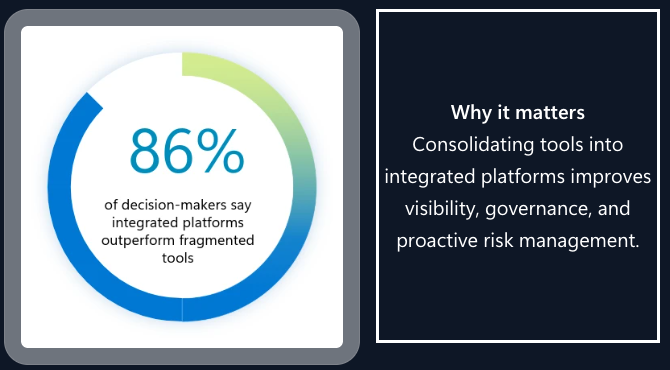
To address these challenges, many organizations are consolidating tools and investing in unified platforms such as Microsoft Purview, bringing data security operations together under a single, integrated framework. Rather than managing disconnected solutions, integrated platforms provide holistic visibility, centralized governance, and stronger control across environments.
These unified approaches consistently outperform fragmented toolsets. They improve detection and response capabilities, streamline management, and reduce operational overhead while strengthening governance.
As AI-powered technologies become more embedded in daily operations, organizations are also embracing emerging disciplines such as Microsoft Purview Data Security Posture Management (DSPM) to stay ahead of evolving risks.
Effective DSPM programs enable security teams to:
- Identify and prioritize data exposure risks
- Detect access to sensitive information
- Enforce consistent controls across environments
- Reduce complexity through unified visibility
When DSPM delivers proactive and continuous oversight, it becomes a critical safeguard, particularly as AI-driven data flows grow more dynamic and interconnected.
According to the 2026 Data Security Index, more than 80% of surveyed organizations are implementing or developing DSPM strategies. This signals a clear shift toward structured data posture management rather than reactive protection.
One security leader summarized the sentiment clearly:
“We’re trying to use fewer vendors. If we need 15 tools, we’d rather not manage 15 vendor solutions. We’d prefer to get that down to five, with each vendor handling three tools.”
— Global Information Security Director, Hospitality and Travel Industry
The direction is clear. Organizations are not looking for more tools. They are looking for fewer platforms that deliver broader visibility, stronger governance, and integrated control across AI-powered environments.
2. Managing AI-Powered Productivity Securely
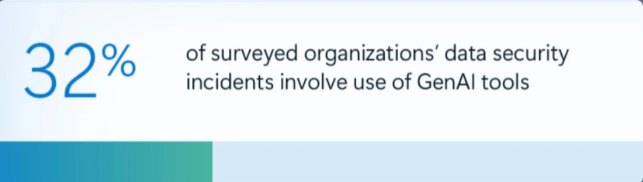
Generative AI is not just transforming workflows. It is already influencing incident patterns. According to the 2026 Microsoft Data Security Index, 32% of surveyed organizations report that their data security incidents involve the use of generative AI tools. That number is significant. AI is no longer an edge case in security conversations. It is embedded in operational reality.
Security leaders are responding accordingly. Nearly 47% of surveyed organizations are implementing generative AI–specific controls, reflecting an 8% increase compared to the 2025 report. The goal is not to restrict innovation, but to enable confident adoption of generative AI applications and agents while maintaining appropriate safeguards.
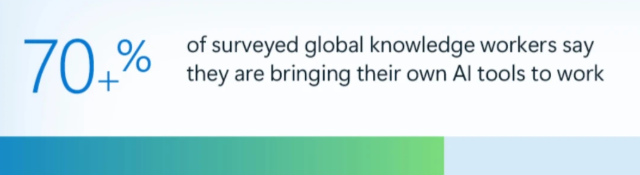
Why This Matters
Generative AI accelerates productivity and unlocks new efficiencies across teams. However, both sanctioned and unsanctioned AI tools must be governed.
Shadow AI usage, uncontrolled integrations, and unmonitored data flows introduce new exposure points. Organizations need visibility into:
- Which AI tools are being used
- What data is being accessed
- How information is shared or processed
- Whether sensitive content is exposed externally
Managing AI-powered productivity securely requires more than blocking tools. It requires governance models that balance enablement with control.
In the full report, Microsoft explores how AI-driven productivity is reshaping enterprise risk profiles and outlines technical and cultural mechanisms that help maintain trust. These include stronger monitoring, adaptive policy controls, and awareness programs designed to reduce risk without undermining the productivity gains AI delivers. The challenge is not choosing between innovation and security. It is designing environments where both scale together.
3. Strengthening Data Security with Generative AI
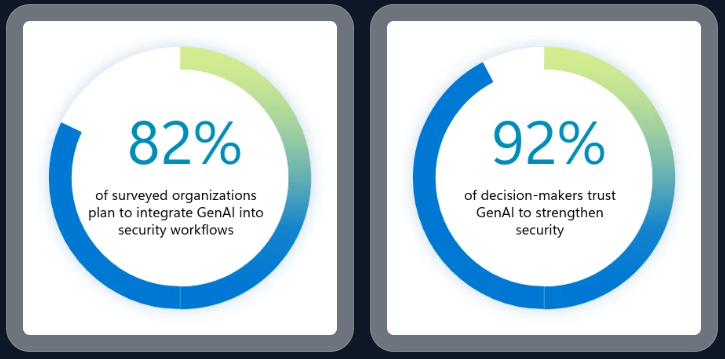
The 2026 Microsoft Data Security Index shows a clear shift: 82% of organizations have developed plans to embed generative AI into their data security operations, up from 64% the previous year.
AI is no longer just something that needs to be governed. It is becoming part of the defense layer itself.
Organizations are using generative AI to:
- Discover sensitive data
- Detect critical risks
- Investigate and triage incidents
- Refine and recommend policies
The report outlines how AI is reshaping day-to-day security operations, including the rise of AI-assisted automation and security agents that augment human teams.
Why It Matters
Generative AI can automate risk detection, scale protection efforts, and accelerate incident response. When implemented correctly, it amplifies human expertise while maintaining oversight and accountability.
As one security leader in the energy sector noted:
“Our generative AI systems are constantly observing, learning, and making recommendations for modifications with far more data than would be possible with any kind of manual or quasi-manual process.”
— Director of IT, Energy Industry
The value lies in scale. AI processes signals and telemetry at a volume no manual workflow could match.
Turning Recommendations into Action
The 2026 Data Security Index highlights three clear imperatives for organizations navigating data security in the age of AI:
- Unify data security
- Increase oversight of generative AI
- Use AI itself to improve security effectiveness
Unified Data Security
Achieving unified data security requires continuous oversight and coordinated enforcement across the entire data estate. Organizations must be able to discover, classify, and protect sensitive information at scale while extending protections across endpoints, SaaS environments, and workloads.
Microsoft Purview DSPM supports this approach through continuous discovery, classification, and protection of sensitive data across cloud, SaaS, and on-premises assets.
Responsible AI Adoption
Responsible AI adoption depends on strong but adaptive controls and proactive risk management. Organizations need automated mechanisms that prevent unauthorized data exposure, monitor anomalous usage, and guide employees toward sanctioned tools.
Microsoft enforces these principles through governance policies supported by Microsoft Purview Data Loss Prevention and Microsoft Defender for Cloud Apps. These capabilities detect, prevent, and respond to risky generative AI behaviors that could lead to data exposure or policy violations.
AI-Driven Security Operations
Modern security operations benefit from automation that accelerates detection and response while maintaining human oversight.
Microsoft Security Copilot, integrated across Microsoft Sentinel, Microsoft Entra, Microsoft Intune, Microsoft Purview, and Microsoft Defender, brings AI-driven automation into threat detection, incident investigation, and policy recommendation workflows. The result is faster response, reduced manual workload, and continuous posture improvement.
Stay Informed. Stay Productive. Stay Protected.
The insights covered here represent only a portion of what the 2026 Microsoft Data Security Index reveals. The full report dives deeper into global trends, detailed metrics, and perspectives from security leaders across industries.
For organizations shaping their generative AI strategy, the report provides practical guidance and real-world data to help build a security-first foundation for innovation.
If you want to explore the research in depth, understand regional differences, and review actionable recommendations for secure AI adoption, the full 2026 Microsoft Data Security Index offers comprehensive analysis and expert commentary to support informed decision-making.